
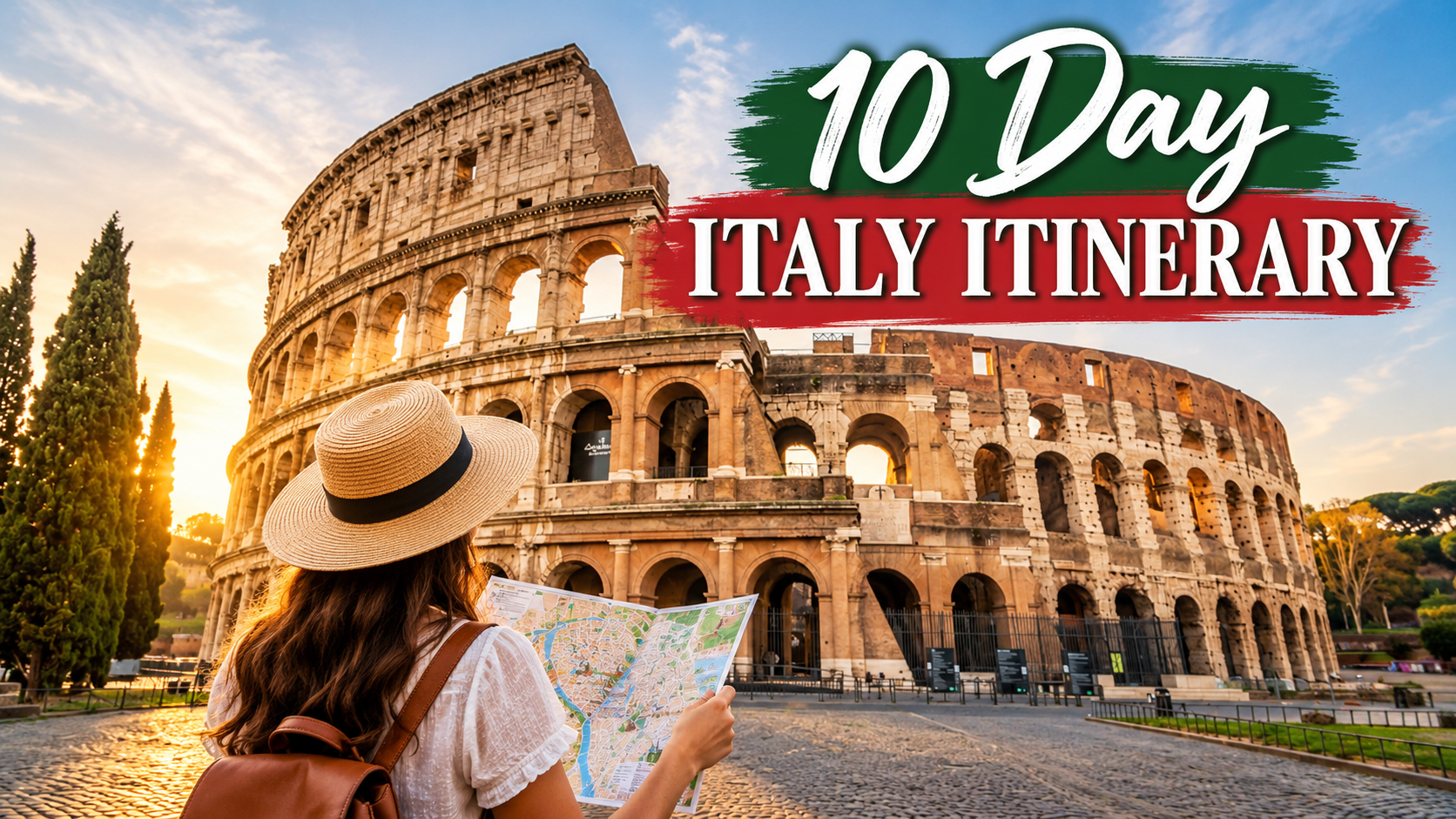
Italy is one of those destinations where history, food, art, architecture, countryside, and everyday life seem to blend effortlessly. A well-planned 10 day Italy itinerary gives you enough time to stand inside the Colosseum in Rome, admire Renaissance masterpieces in Florence, wander through Tuscan landscapes, ride a vaporetto along Venice’s Grand Canal, and finish among the elegant streets of Milan or the dramatic scenery of Lake Como. Add handmade pasta, regional wines, lively piazzas, centuries-old churches, and small cafés along the way, and even a relatively short trip can feel remarkably complete.
Ten days is especially well suited to first-time visitors who want to experience Italy’s most famous cities without changing hotels every night. The pace is active but manageable: expect plenty of walking, several early starts, and a few train journeys, balanced with long lunches, evening strolls, and slower moments in historic neighborhoods. This route focuses mainly on central and northern Italy, where fast rail connections make it possible to experience very different regions without wasting large portions of your vacation in transit.
Quick 10 Day Italy Itinerary Overview
For most first-time travelers, this route offers an excellent balance of history, food, culture, scenery, and manageable travel times.
| Day | Destination | Highlights |
|---|---|---|
| Day 1 | Rome | Historic center, Trevi Fountain, Pantheon |
| Day 2 | Rome | Colosseum, Roman Forum, Trastevere |
| Day 3 | Rome | Vatican Museums, St. Peter’s Basilica |
| Day 4 | Florence | Duomo, Piazza della Signoria, historic center |
| Day 5 | Florence | Uffizi Gallery, Ponte Vecchio, Tuscan food |
| Day 6 | Tuscany or Bologna | Countryside and wine or food-focused city break |
| Day 7 | Venice | St. Mark’s Square, canals, Rialto Bridge |
| Day 8 | Venice | Doge’s Palace, Murano and Burano |
| Day 9 | Milan or Lake Como | Duomo and shopping or lakeside scenery |
| Day 10 | Milan/Lake Como | Final sightseeing and departure |
This Italy itinerary 10 days route works particularly well because most of the major stops are connected by fast trains. It also gives you several opportunities to adjust the trip according to your interests.
Days 1–3: Begin Your 10 Day Italy Itinerary in Rome
Day 1: Historic Rome, Trevi Fountain and the Pantheon
Rome is the natural place to begin. Italy’s capital contains more than enough history and attractions for an entire vacation, but three days will give first-time visitors a satisfying introduction.
After arriving and checking into your hotel, keep your first day relatively relaxed. Walk through Rome’s historic center and visit the Trevi Fountain, where tradition says throwing a coin into the water helps ensure your return to Rome.
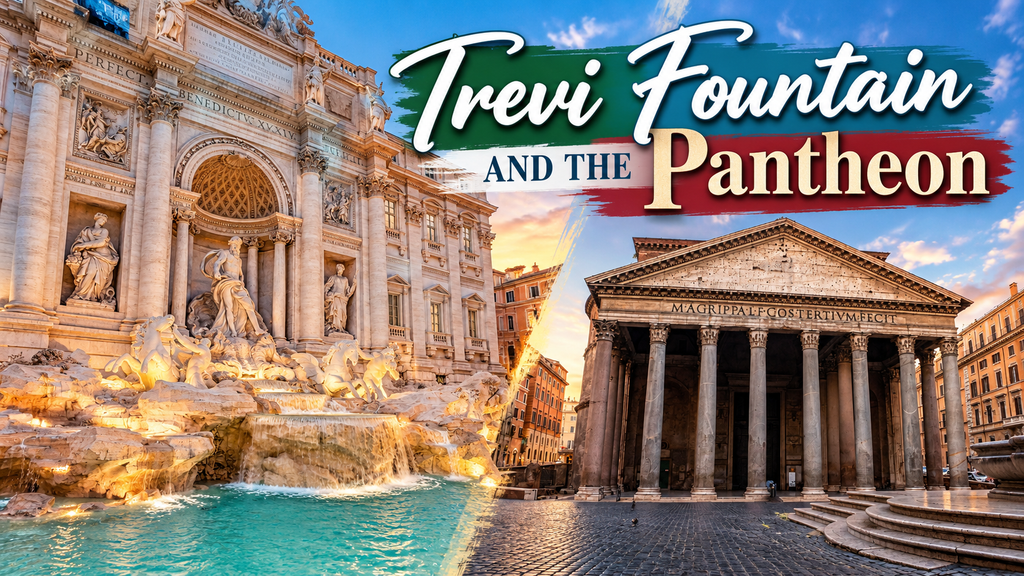
Continue toward the Pantheon, one of ancient Rome’s best-preserved monuments, before exploring Piazza Navona and its fountains, cafés, and street life.
Avoid trying to schedule too many ticketed attractions immediately after a long flight. Rome is best appreciated on foot, and an unhurried first evening gives you time to adjust while still experiencing some of the city’s most famous places.
Finish with dinner in a traditional Roman trattoria. Look for classics such as carbonara, cacio e pepe, amatriciana, or saltimbocca.
Day 2: Colosseum, Roman Forum and Trastevere
Dedicate your second day to ancient Rome.
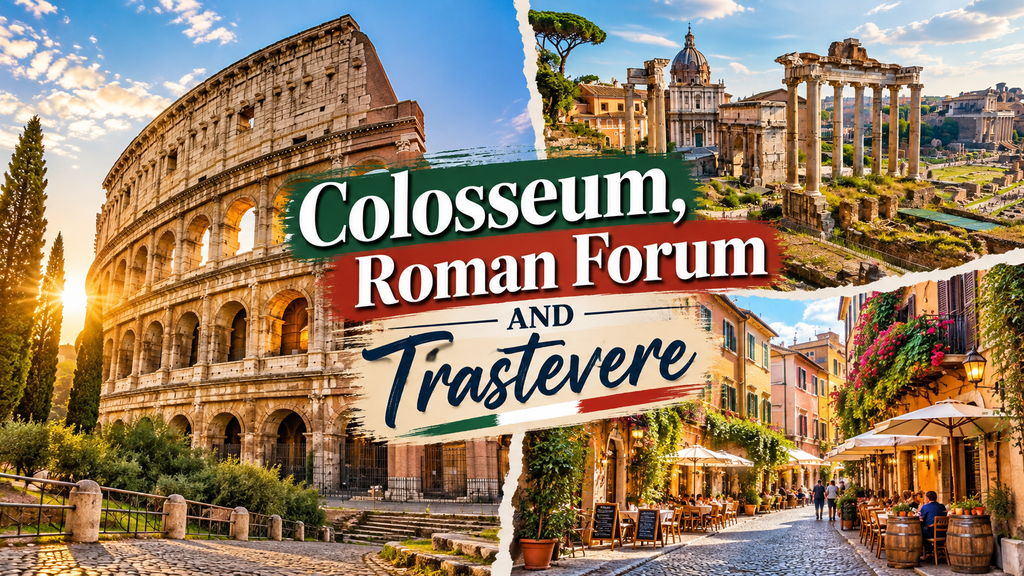
Start at the Colosseum, ideally with a timed reservation. From there, continue into the Roman Forum and Palatine Hill. These archaeological areas reveal the political, religious, and social center of the ancient Roman world.
Allow several hours for the entire complex rather than rushing through it.
Later in the afternoon, cross the Tiber River and explore Trastevere. Its narrow streets, weathered buildings, small restaurants, and lively piazzas provide a completely different atmosphere from monumental Rome.
Stay through dinner if possible. Trastevere becomes particularly atmospheric in the evening.
Day 3: Vatican Museums and St. Peter’s Basilica
The third day of your 10 day Italy itinerary should focus on Vatican City.
Reserve your Vatican Museums admission ahead of time, particularly during spring, summer, and early autumn. Inside you will find enormous collections of classical sculptures and Renaissance art, eventually leading to the Sistine Chapel.
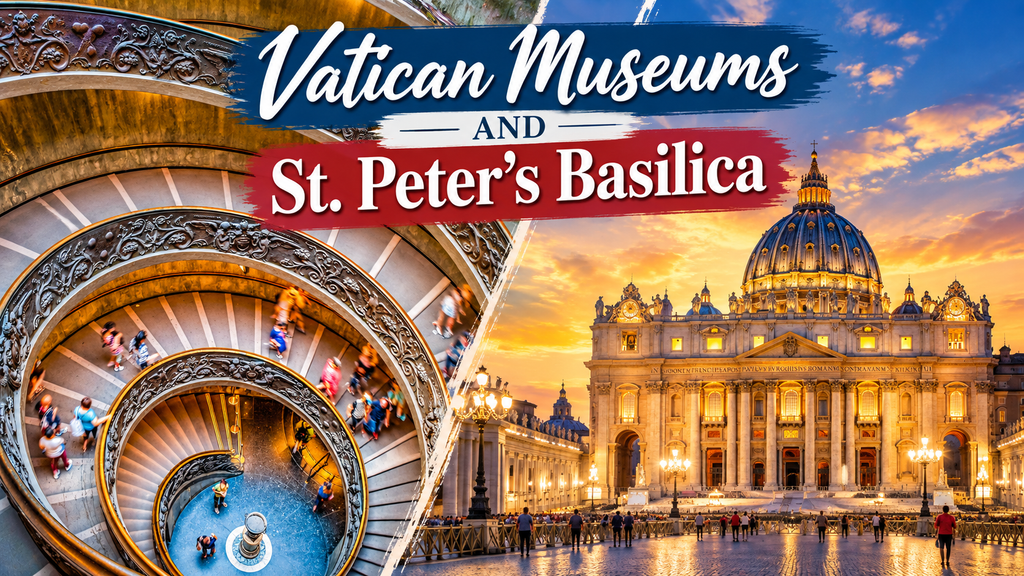
After the museums, visit St. Peter’s Basilica and St. Peter’s Square.
Remember that the Vatican enforces clothing rules. The Vatican Museums state that sleeveless or low-cut clothing, shorts above the knee, miniskirts, and hats are not permitted in the museums, Sistine Chapel, St. Peter’s Basilica, or Vatican Gardens.
Where to Stay in Rome
For a first visit, consider:
Centro Storico for walking access to many major sights.
Monti for restaurants, atmosphere, and proximity to the Colosseum.
Prati if visiting the Vatican is especially important.
Trastevere for nightlife and neighborhood character.
Rome’s metro is useful for longer journeys, but many central attractions are best connected on foot.
Days 4–5: Florence and the Italian Renaissance
On the morning of Day 4, take a high-speed train from Rome to Florence.
This is one of the reasons this Italy 10 day itinerary works so efficiently. Italo currently lists Rome–Florence journeys at about 1 hour 25 minutes on its fastest services, making flying or driving unnecessary for most travelers.
Day 4: Florence Cathedral and Historic Center
Begin around Piazza del Duomo.
Florence Cathedral, commonly called the Duomo, dominates the center of the city with Brunelleschi’s enormous dome. Nearby are Giotto’s Campanile and the Baptistery.
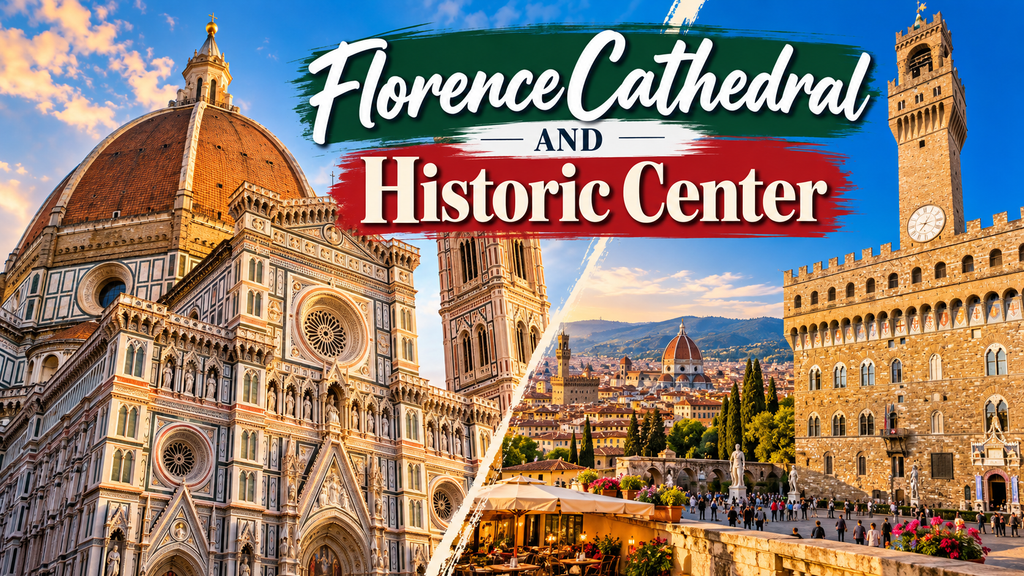
Continue toward Piazza della Signoria, where Florence’s political history and Renaissance architecture come together around Palazzo Vecchio.
From there, walk toward the Arno River and cross the Ponte Vecchio, one of Florence’s best-known landmarks.
One of Florence’s greatest advantages is its compact size. Unlike Rome, many of the main attractions are within comfortable walking distance of one another.
Day 5: Uffizi Gallery and Tuscan Food
Reserve the morning for the Uffizi Gallery, particularly if Renaissance art is one of your reasons for visiting Italy. Its collection includes works connected with Botticelli, Leonardo da Vinci, Michelangelo, Raphael, and other masters.
Afterward, give yourself time simply to enjoy Florence.
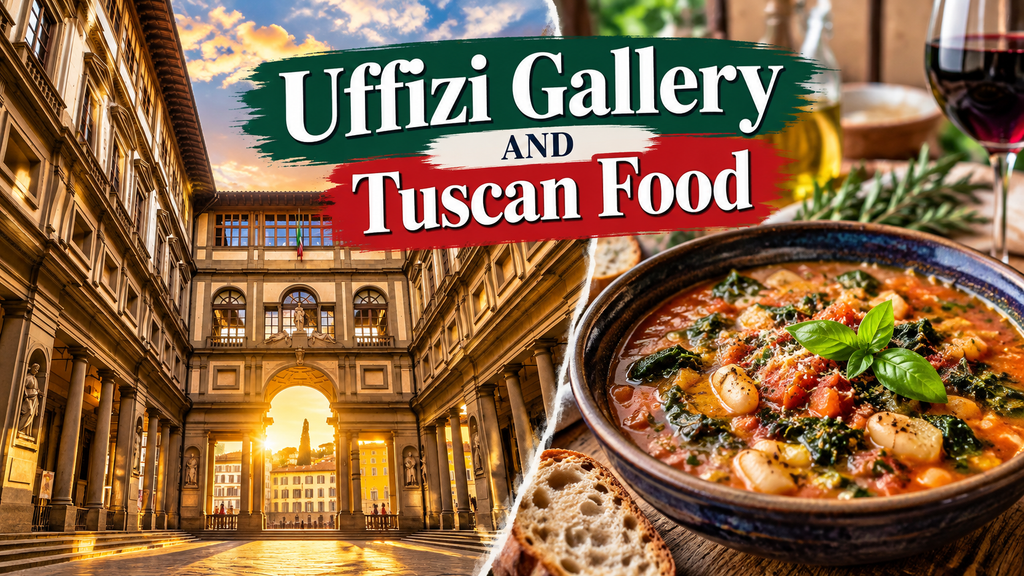
Eat a leisurely Tuscan lunch, visit a local market, stop for gelato, or walk toward Piazzale Michelangelo for one of the classic panoramic views over the city.
Food should be part of the experience rather than something squeezed between attractions. Depending on your preferences, try bistecca alla Fiorentina, ribollita, pappardelle, crostini, pecorino cheese, and regional Tuscan wine.
For travelers searching for the best 10 day Italy itinerary, two nights in Florence strikes a good balance: enough time to see the major landmarks without taking too much time away from the rest of the country.
Day 6: Tuscany or Bologna
Day 6 is where you can personalize the trip.
Option 1: Tuscany Countryside
Choose Tuscany if rolling hills, vineyards, medieval towns, and countryside views are part of your dream of Italy.
Possible destinations include Siena, San Gimignano, the Chianti region, or smaller towns in the surrounding countryside.
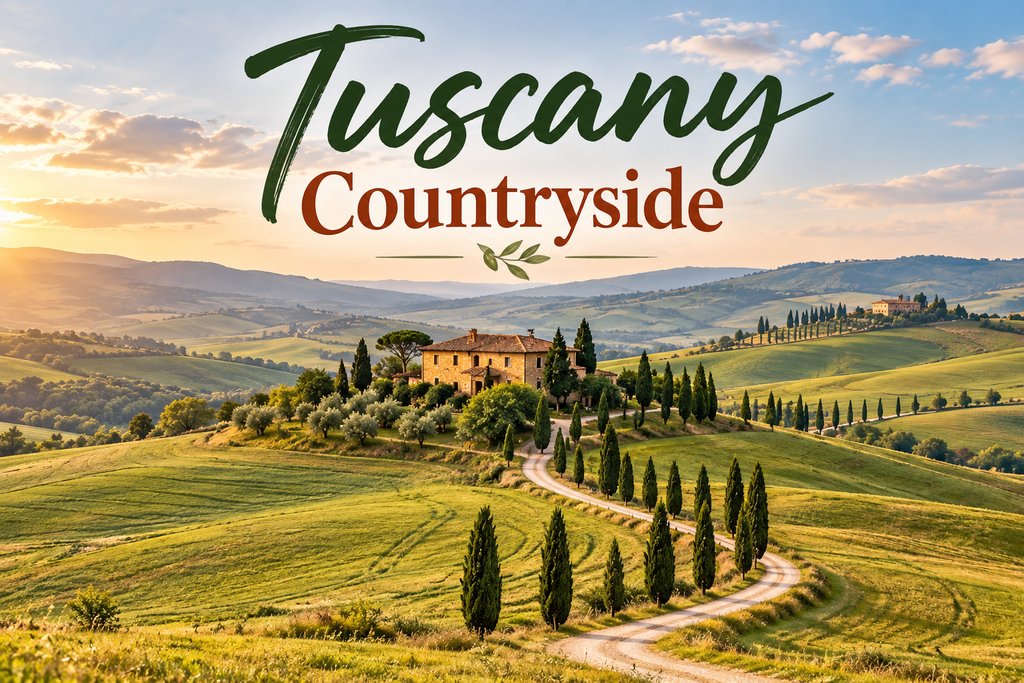
This is also the point where renting a car can make sense. Rail is excellent between major Italian cities, but a car provides considerably more flexibility when exploring rural Tuscany.
If you specifically want an Italy road trip itinerary 10 days experience, you could rent a car in Florence for Day 6 and explore Tuscany before returning it rather than driving through congested historic cities for the entire trip.
Option 2: Bologna
Choose Bologna if food is a major reason you are visiting Italy.
Bologna is famous for its porticoes and rich culinary traditions. Tagliatelle al ragù, tortellini, mortadella, Parmigiano Reggiano, and products from the wider Emilia-Romagna region make it one of Italy’s great food destinations.
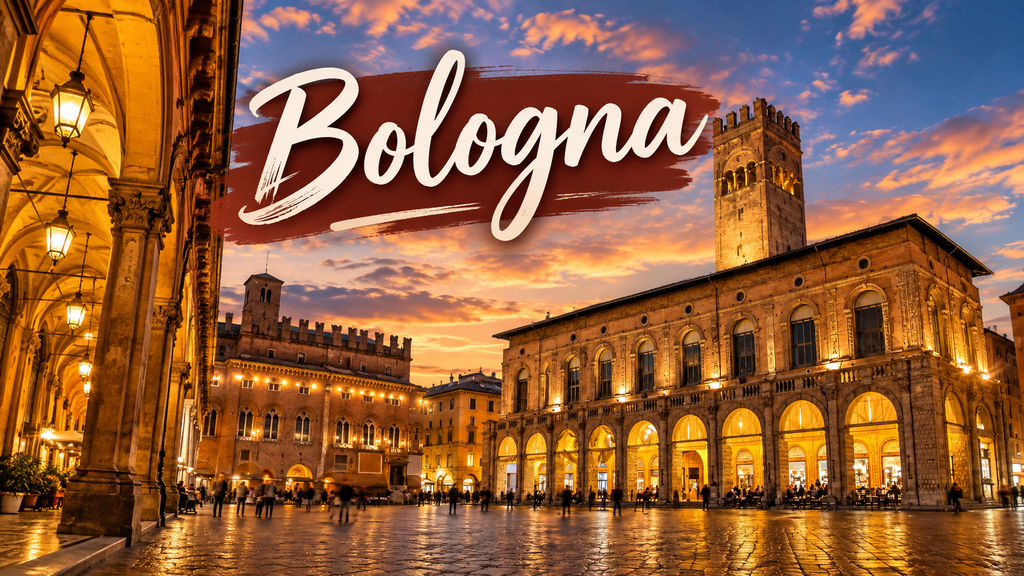
It is also particularly convenient by rail, making Bologna the easier option for visitors who do not want to rent a car.
Personally, I would choose Tuscany for a first trip if you want visual variety. After several days in historic cities, the countryside creates a refreshing change of pace.
Days 7–8: Venice
Travel onward to Venice and prepare for another completely different version of Italy.
High-speed trains make this transition surprisingly easy. Italo lists Florence–Venice journeys of roughly 2 hours 15 minutes.
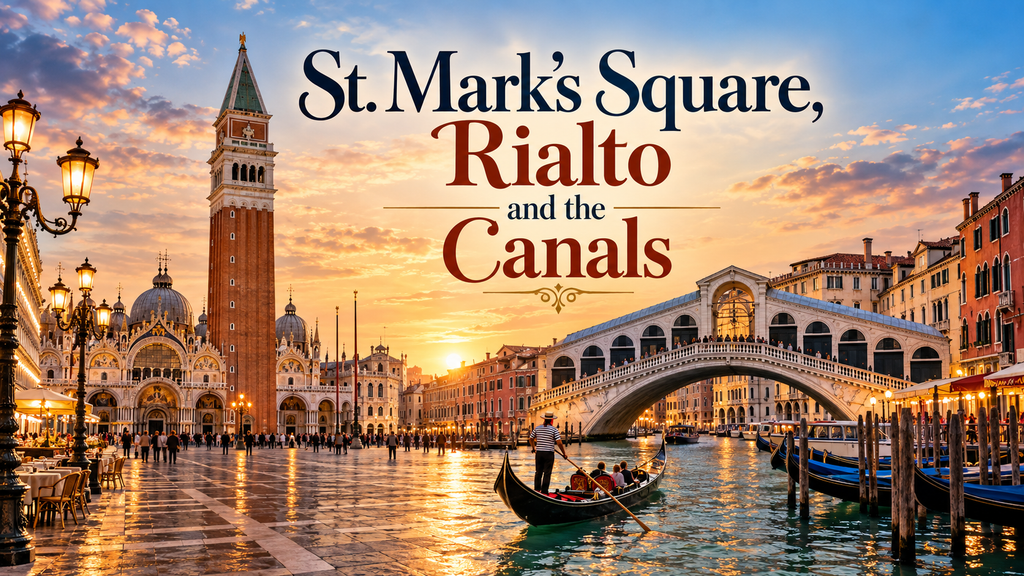
Day 7: St. Mark’s Square, Rialto and the Canals
Start around St. Mark’s Square.
Visit St. Mark’s Basilica and see the exterior of the Doge’s Palace before wandering toward the Rialto Bridge.
But don’t spend your entire Venice visit checking landmarks off a list.
Some of my favorite moments in Venice come from deliberately walking away from the busiest routes. Within minutes you can find quiet canals, tiny bridges, residential squares, and neighborhoods that feel remarkably peaceful compared with St. Mark’s Square.
A gondola ride is optional rather than essential. For a more practical experience, ride a vaporetto along the Grand Canal and watch Venice unfold from the water.
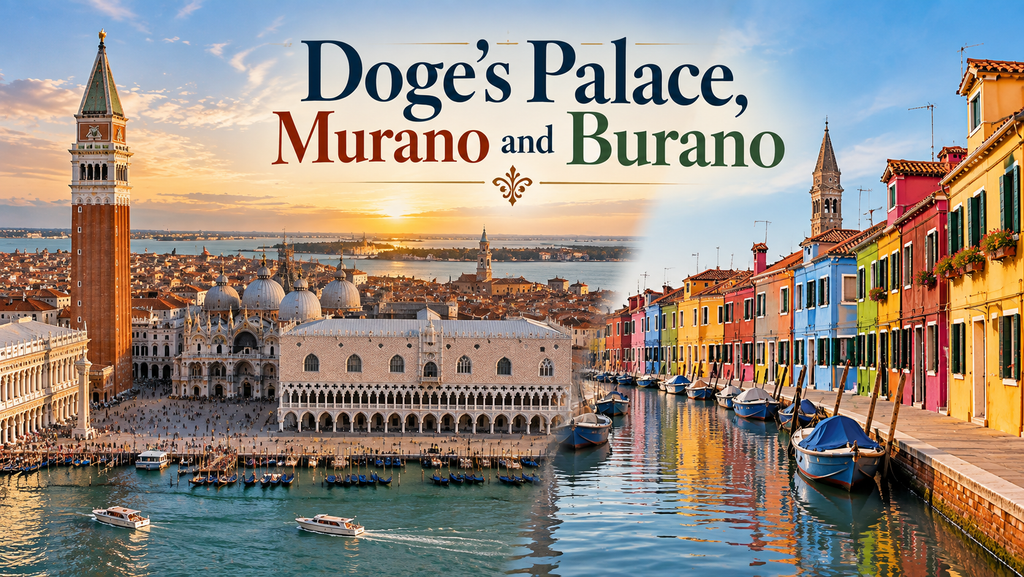
Day 8: Doge’s Palace, Murano and Burano
Begin with the Doge’s Palace if you did not tour it the previous day.
Then consider spending the afternoon exploring the Venetian Lagoon.
Murano is particularly associated with traditional glassmaking, while Burano is famous for its colorful houses and lace-making heritage.
Trying to visit both islands plus every major attraction in central Venice can make the day rushed, so choose according to your priorities.
A good 10 days in Italy itinerary should leave at least a little space for spontaneous discoveries. Venice is one of the destinations where that matters most.
Days 9–10: Milan or Lake Como
The final section gives you another choice.
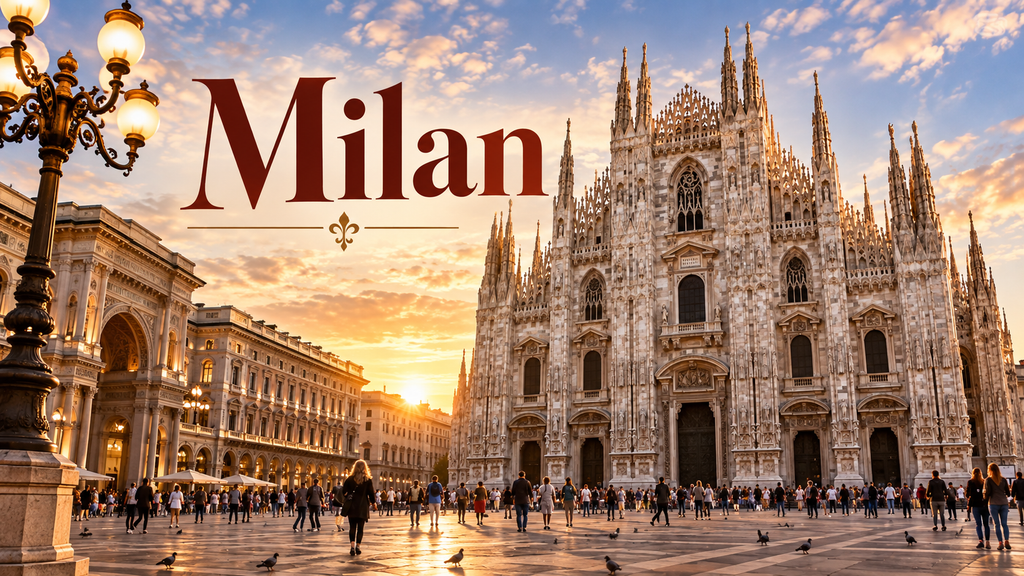
Option 1: Milan
Choose Milan if you enjoy architecture, fashion, shopping, nightlife, and urban energy.
Start with Milan Cathedral, or the Duomo di Milano, before exploring the nearby Galleria Vittorio Emanuele II.
Fashion lovers can explore the Quadrilatero della Moda, while art enthusiasts may want to see Leonardo da Vinci’s The Last Supper. Tickets for popular attractions should be booked ahead.
Milan also makes practical sense as the final stop because it has major international air connections.
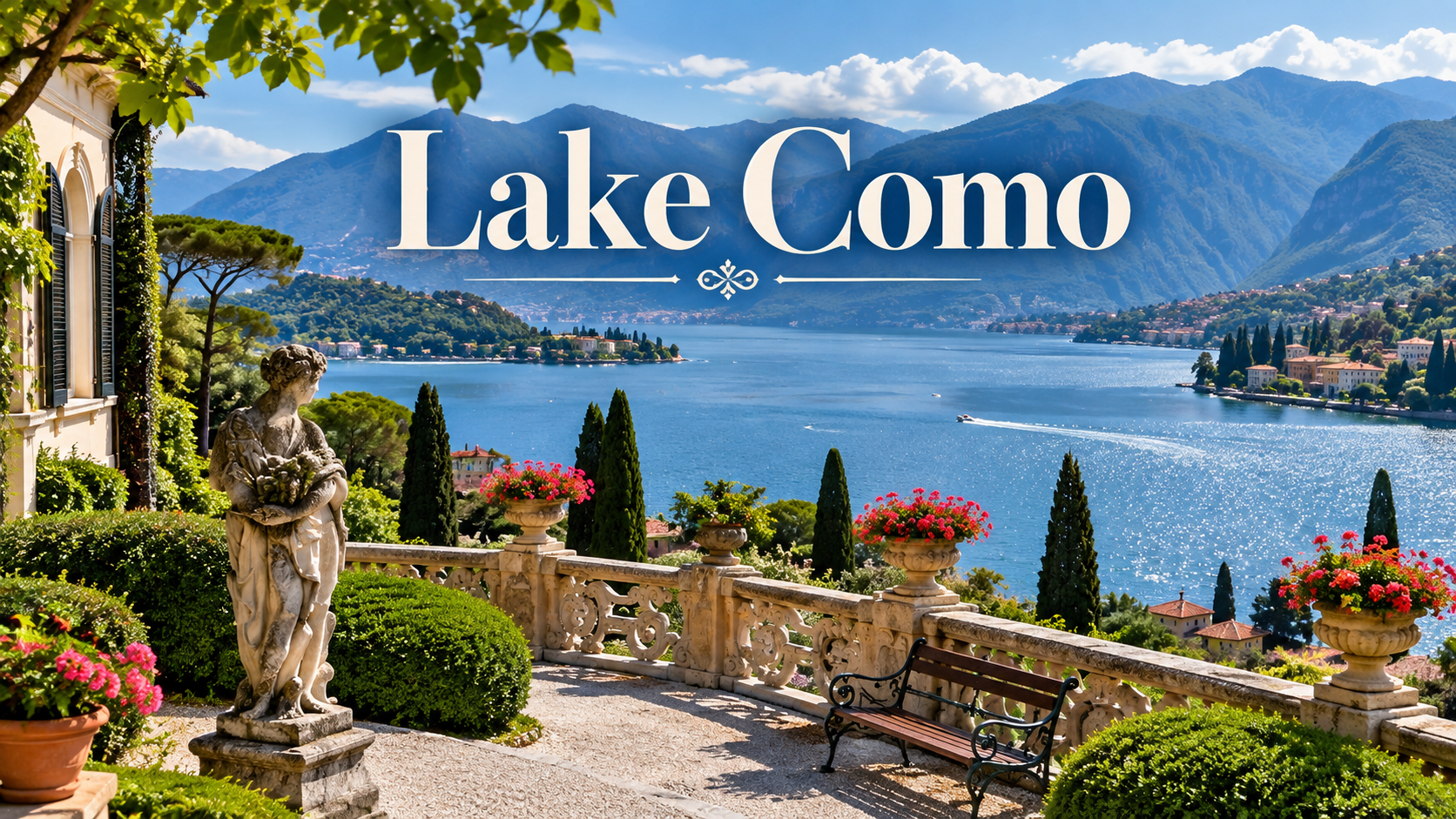
Option 2: Lake Como
If you would rather finish your 10 day Italy itinerary somewhere peaceful, continue toward Lake Como.
Towns such as Como, Bellagio, and Varenna offer lakefront walks, historic villas, mountain views, and ferry rides.
After more than a week of museums, monuments, train stations, and busy city streets, slowing down beside the lake can be the perfect ending.
For many travelers, I would choose Lake Como for Day 9 and return toward Milan on Day 10 depending on the departure airport and flight schedule.
How to Travel Between Cities
For this particular route, high-speed trains are generally better than renting a car.
Italy’s high-speed network connects Rome, Florence, Venice, Milan, Bologna, and other major cities. Italo currently advertises approximate journey times of 1.5 hours from Rome to Florence, 2 hours 15 minutes from Florence to Venice, and 2 hours 15 minutes from Venice to Milan.
That means you can often leave one city after breakfast and be walking around the next destination before lunch.
Driving makes more sense when visiting:
- Rural Tuscany
- Small villages
- Vineyards
- Agriturismos
- Remote countryside destinations
For Rome, Florence, Venice, and Milan themselves, a car usually adds parking, traffic, and restricted-driving-zone complications without providing much benefit.
How Much Does a 10-Day Italy Trip Cost?
The total cost varies dramatically depending on the season, accommodation style, how early you book, and how often you eat at high-end restaurants.
For a rough planning framework, consider the following per person, based on two people sharing accommodation where applicable:
Budget traveler: roughly €100–€160 per day
Comfortable mid-range traveler: roughly €180–€300 per day
Upper-mid-range or luxury traveler: €350+ per day
A typical budget may include:
- Accommodation: €70–€250+ per night depending on city and season
- Food: €35–€80+ per person daily
- Trains and local transport: €150–€300+ across the trip
- Museums and attractions: €100–€200+ overall
- Additional money for shopping, tours, taxis, wine experiences, and day trips
Prices can rise considerably during major events and peak travel periods, so treat these figures as planning ranges rather than fixed rates.
Where to Stay During This Italy Itinerary 10 Days Route
Location matters more than luxury on a short trip because a centrally located hotel reduces commuting time.
Rome: Centro Storico, Monti, Prati, or Trastevere.
Florence: Historic Center, Santa Maria Novella, or Santa Croce.
Venice: San Marco for convenience, Cannaregio for a more residential atmosphere, or San Polo for central access.
Milan: Centro Storico, Brera, or around Milano Centrale if onward transportation is important.
Lake Como: Como for convenience, Varenna for train access and atmosphere, or Bellagio for classic lake scenery.
Because you only have 10 days in Italy, moving hotels unnecessarily can eat into valuable sightseeing time. Stay near transportation and attractions whenever the price difference is reasonable.
Best Time to Follow This 10 Day Italy Itinerary
Spring and early autumn are particularly attractive for this route.
April, May, early June, September, and October can provide a good combination of pleasant weather and outdoor sightseeing. Italy’s official tourism site specifically highlights spring for its favorable climate, countryside scenery, villages, lakes, and outdoor activities.
July and August remain popular, but travelers should expect heat, larger crowds, and potentially higher accommodation prices in major destinations.
Winter can mean fewer tourists and lower prices in some places, but shorter daylight hours and cooler conditions change the experience considerably.
For extensive walking in Rome, Florence, and Venice, mild weather makes a noticeable difference.
Italy Travel Tips for First-Time Visitors
A few practical decisions can make an Italy 10 day itinerary considerably smoother.
Reserve major attractions early. The Colosseum, Vatican Museums, Uffizi Gallery, Doge’s Palace, and The Last Supper can be difficult to visit spontaneously during busy periods.
Book high-speed trains in advance. Earlier bookings often provide more choices of times and fares.
Pack light. You will move between several cities, stations, platforms, bridges, and hotels. Large luggage becomes surprisingly tiring.
Wear comfortable shoes. Rome’s cobblestones, Florence’s historic streets, and Venice’s bridges add up to a lot of walking.
Dress appropriately for churches. Religious sites may require covered shoulders and appropriate clothing. Vatican City has particularly explicit visitor rules.
Watch your belongings. As in other major tourist destinations, busy stations, public transport, and crowded landmarks deserve extra awareness.
Don’t schedule every hour. Italy rewards slowing down. Leave time for coffee, gelato, markets, neighborhood walks, and long meals.
Adapt to Italian dining times. Dinner commonly happens later than some international visitors expect, and restaurants can be quieter earlier in the evening.
Most importantly, resist the urge to add another city simply because it fits geographically. Seeing fewer places properly usually produces a better trip than spending half of every day checking out, traveling, and checking in again.
Is 10 Days Enough for Italy?
Yes—10 days is enough for an excellent first trip to Italy, provided you focus on one region of the country rather than trying to see everything.
This route gives you three days in Rome, two in Florence, a choice between Tuscany and Bologna, two days in Venice, and a final experience in Milan or Lake Como.
You will experience ancient Roman history, Renaissance art, regional Italian cuisine, Tuscan landscapes, Venetian canals, and northern Italian culture within one journey.
What you won’t see is southern Italy, Naples, Pompeii, the Amalfi Coast, Sicily, Sardinia, or Puglia. Those destinations deserve another trip rather than being squeezed unnaturally into this one.
Final Thoughts: Planning the Best 10 Day Italy Itinerary
The beauty of spending 10 days in Italy is not simply the number of famous attractions you can visit. It is the variety you can experience over a relatively short distance: ancient ruins in Rome, Renaissance streets in Florence, Tuscan countryside, Venice’s canals, and the sophisticated energy of Milan or peaceful scenery of Lake Como.
This 10 day Italy itinerary works especially well for first-time visitors because the route follows efficient transportation links and balances major landmarks with food, neighborhoods, scenery, and free time. You can customize it with Tuscany, Bologna, Milan, or Lake Como without changing the overall structure.
An Italy itinerary 10 days long will never show you everything the country has to offer—and that is part of Italy’s appeal. Rather than rushing south and north in the same trip, use these ten days to experience a manageable part of the country properly. When the journey ends, there will still be the Amalfi Coast, Sicily, Puglia, the Dolomites, Naples, and countless smaller towns waiting for the next visit.